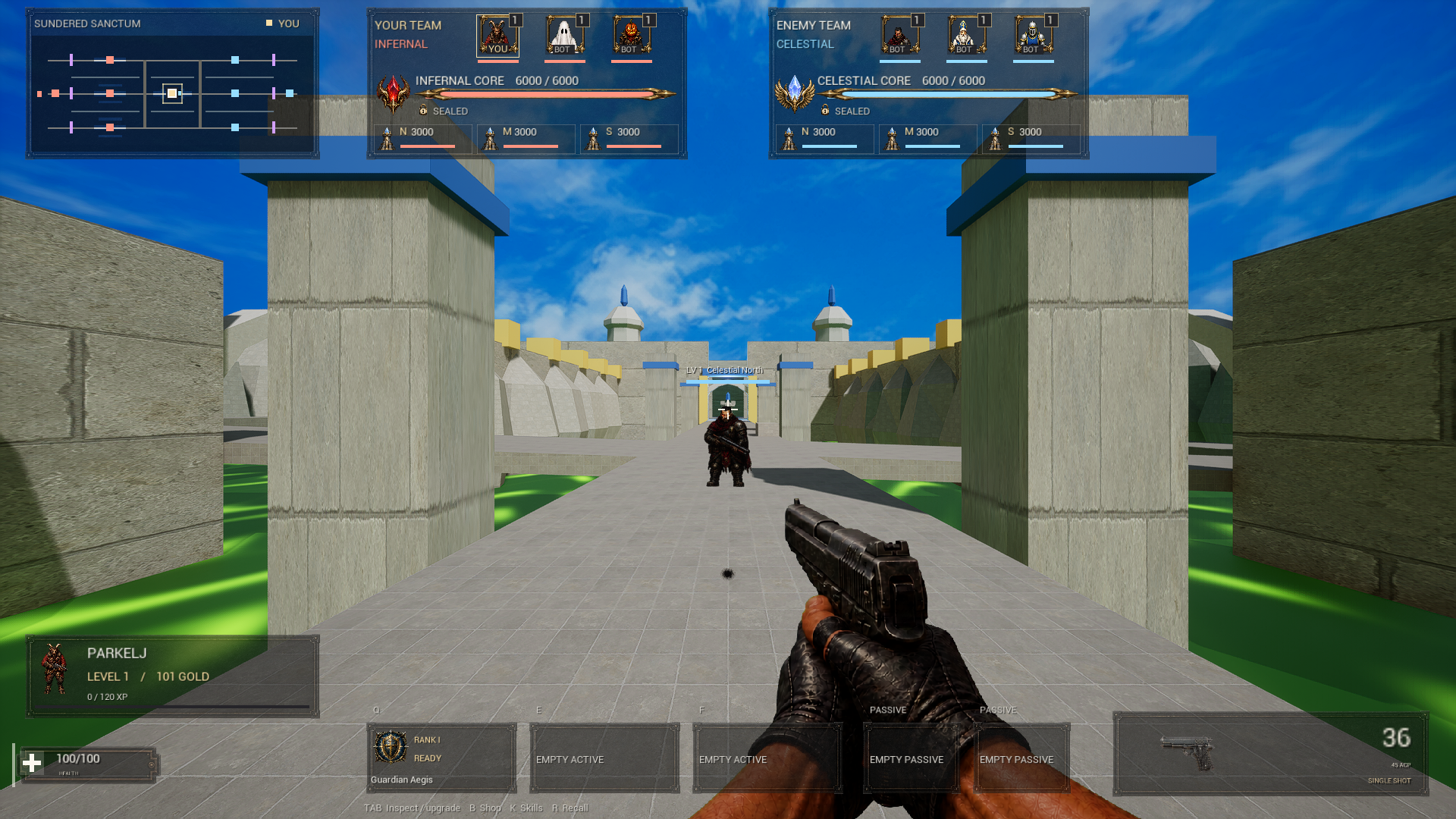
I've added a rather different way to play Go Jače FPS. Heroes Arena takes the game's first-person shooting and retro characters into a 3v3 battle of lanes, towers, creep waves and destructible cores. You still aim the guns yourself, but now there's a bigger question than who's winning the firefight: are we actually pushing toward the enemy base?
A shooter with a lane-pushing problem
The idea is to combine a MOBA-style match structure with the immediacy of an FPS. Two teams, Infernal and Celestial, field three heroes each. AI-controlled creeps march down three lanes, heroes earn gold and experience, and the match ends when one side destroys the other's core. Kills help the push; they aren't the victory condition.
That changes the decisions around the shooting. Do you stay with a wave, cross over to help another lane, defend a damaged tower, or recall to spend your gold? Winning a duel is useful, but leaving your own base undefended while chasing someone is still a fairly effective way to lose.
The pictures here are real captures from development builds. The overhead camera, creep lineup and high-level inventory views are staged to show the map and systems clearly; they aren't concept art or a claim that every match starts with a fully equipped hero.
Sundered Sanctum: three lanes above the sludge
The first dedicated arena is Sundered Sanctum: a mirrored fortress of raised stone lanes, towers, bridges and glowing barriers, suspended above a distinctly unwelcoming green sludge moat. There are cross-lane routes for rotations and flanking, but the dividers are actual obstacles, not just lines on a minimap. Falling into the sludge is fatal.
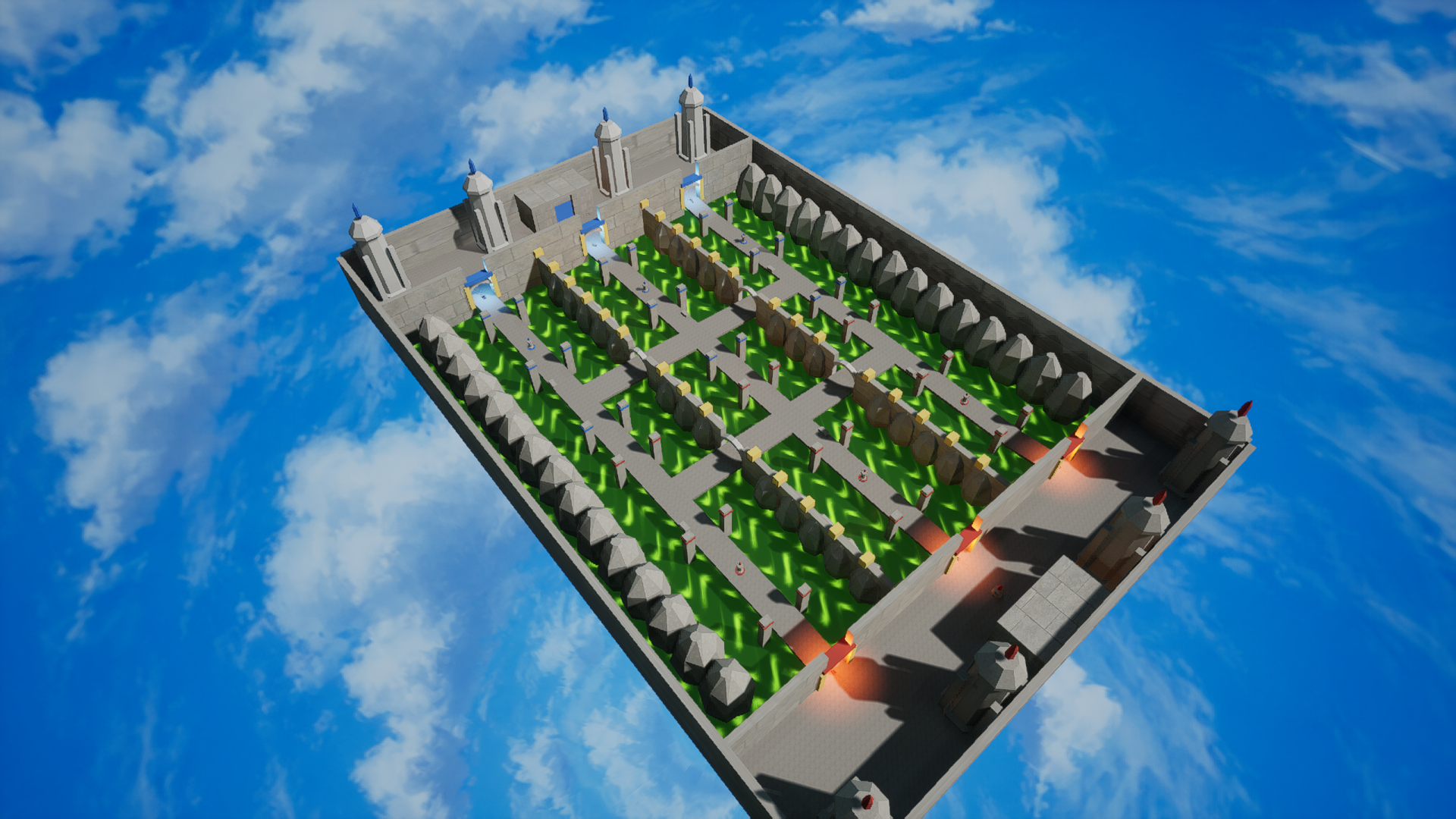
Each team starts with three defensive towers and a core. Destroying a tower opens that lane's enemy base gate; the first tower lost also exposes the defending core. You don't have to knock down all three before making a run at the finish.
The important catch is creep support. Towers and cores take 90% less damage when there isn't an attacking creep nearby. A lone hero trying to brute-force a structure is much less effective than a coordinated push that gets its wave into position.
Destroyed towers can also be rebuilt after a delay, with an allied hero staying nearby to enable construction. Work pauses when nobody is there. Rebuilding brings back a defensive position, but it doesn't close an already-open base gate or undo the core's exposure.
The little army matters
Regular waves arrive every 30 seconds, with three melee demons and a ranged Cinder Imp for each lane on each side. Every third wave adds the heavier Ash Brute. They emerge sequentially through coloured rune portals and head toward the opposing defences.
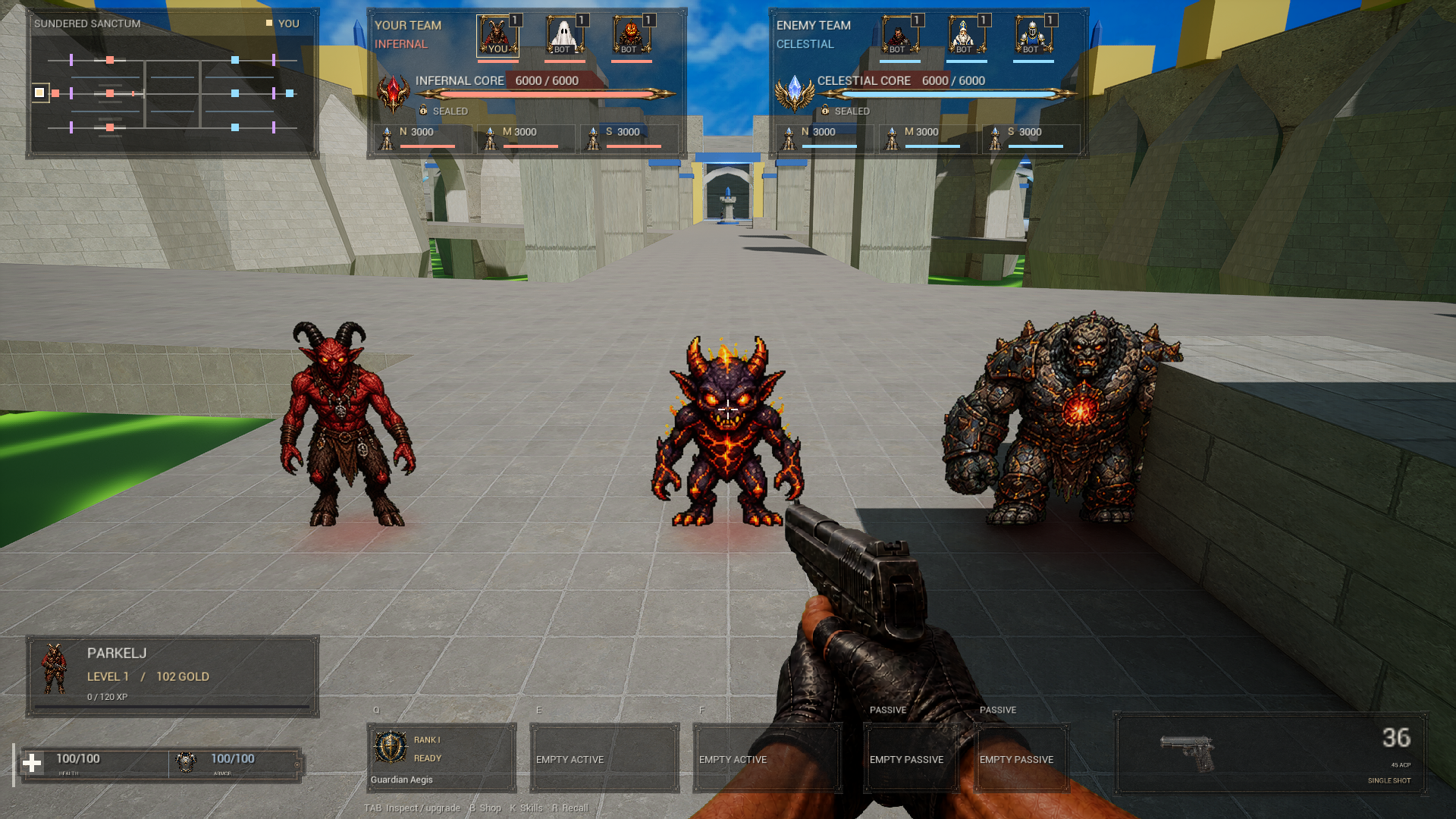
These aren't just moving scenery. They fight, provide vision and make structures vulnerable when they reach them. Staying close to the action earns shared gold and XP, with an extra last-hit gold reward. Some defeated creeps also leave ammunition or bonus gold for the team that brought them down.
The tactical minimap follows allied sight rather than revealing every enemy through the walls. It also zooms in around the local hero during hero-versus-hero combat, then returns to the wider view. Team portraits, health, core gauges and north/mid/south tower cards keep the larger fight visible while you're aiming down a lane.
Build your hero during the match
You choose from the characters you've already unlocked, with a starter power tied to the chosen hero. Appearance doesn't lock you to a faction: even a Parkelj can fight on the Celestial side. Heroes begin at level 1 with a pistol, melee, their starter skill and 100 match gold, then progress up to level 10.
The current catalog offers seven active powers and twelve passives, but your loadout holds only three actives and two passives. Frost Nova controls nearby enemies, Healing Ward supports allies, Chain Lightning hits multiple visible targets, and Guardian Aegis gives you a defensive option. Speed Surge, Blood Rite and Infernal Brand complete the active set.
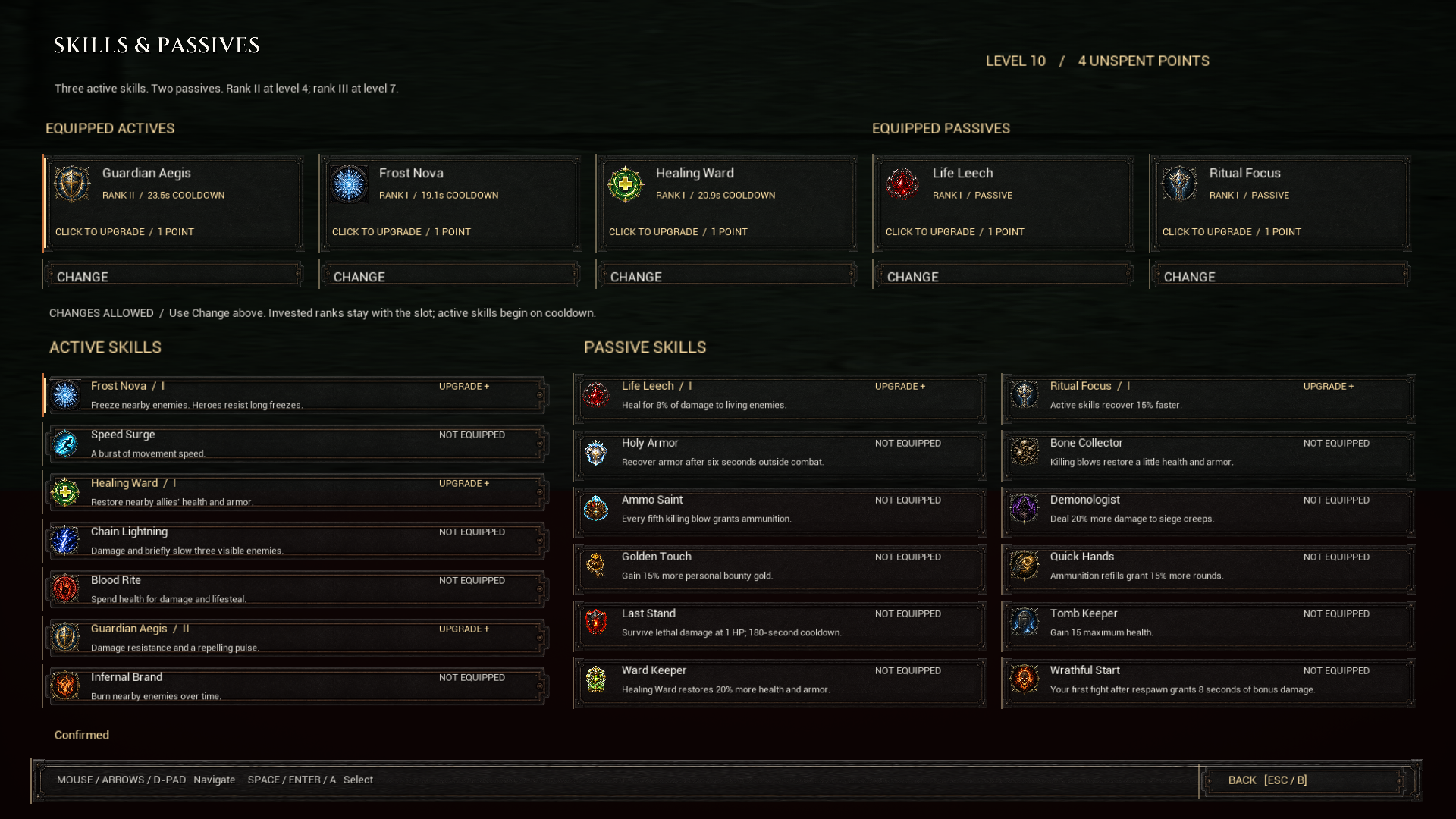
Rank-II upgrades become available at level 4 and rank III at level 7. Passives add choices such as lifesteal, armor recovery, improved bounty gold or faster skill recovery. The host can allow skill changes during the match or lock selections, so experimenting with a build is an explicit lobby rule.
The shop adds another layer: buy weapons and ammunition, then fill eight equipment slots with items that affect armor, movement, healing, cooldowns and other attributes. You can browse anywhere, but purchases require your sanctuary or the respawn screen. Opening a menu does not pause the fight.
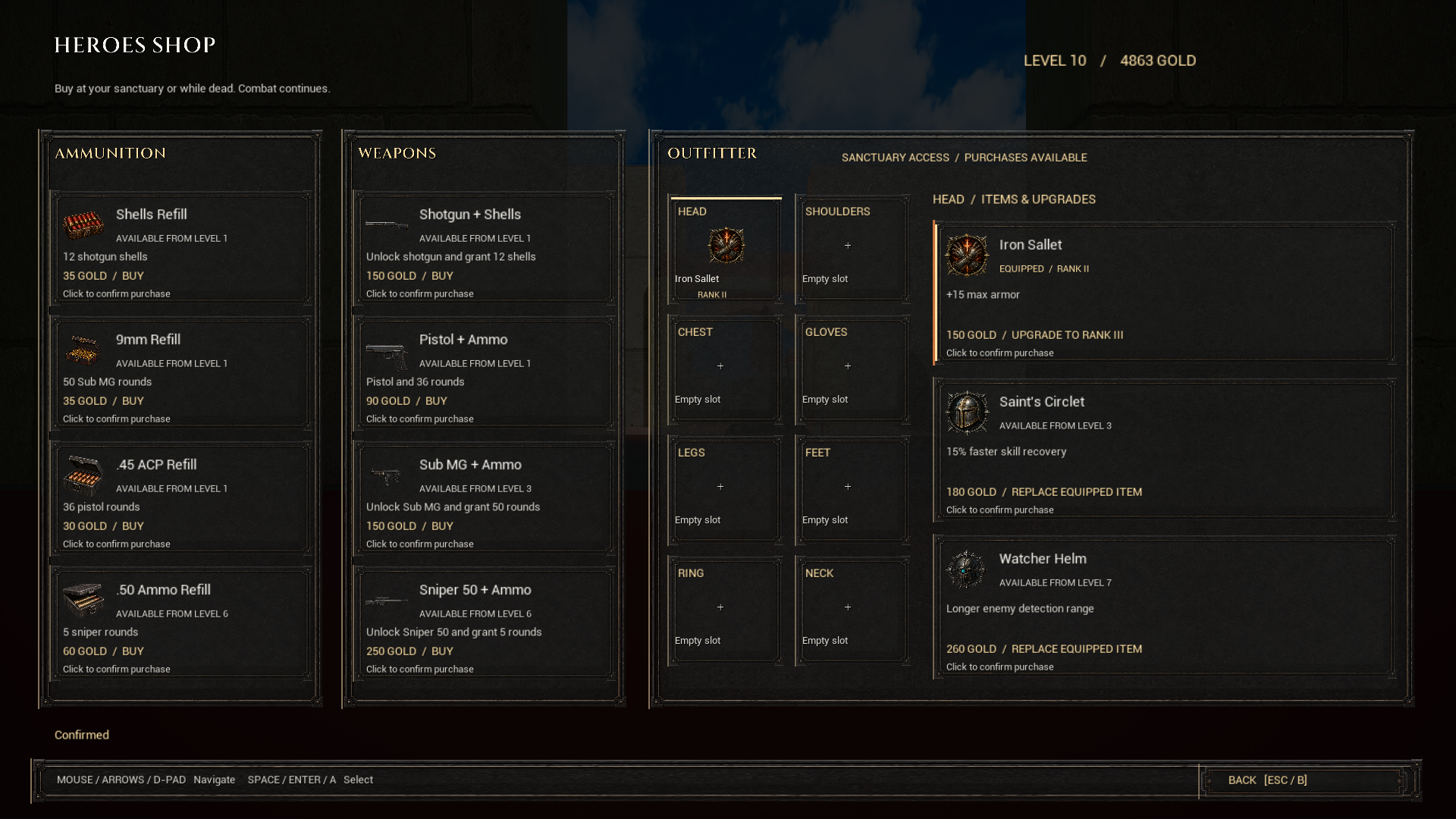
A six-second recall lets you return to the sanctuary, provided it isn't interrupted. Death costs time rather than wiping your investment: level and loadout stay with you through respawns. This gold, equipment and skill progression belongs to the current Heroes match, separate from Horde's progression systems.
Bring friends, or let the bots fill in
Heroes Arena has its own entry screen and lobby, with Play with Bots, LAN/online hosting and browsing, hero selection, team switching and match setup. Empty slots are filled by hero bots, so you can try the mode without assembling six people first. Sundered Sanctum is currently its dedicated map.
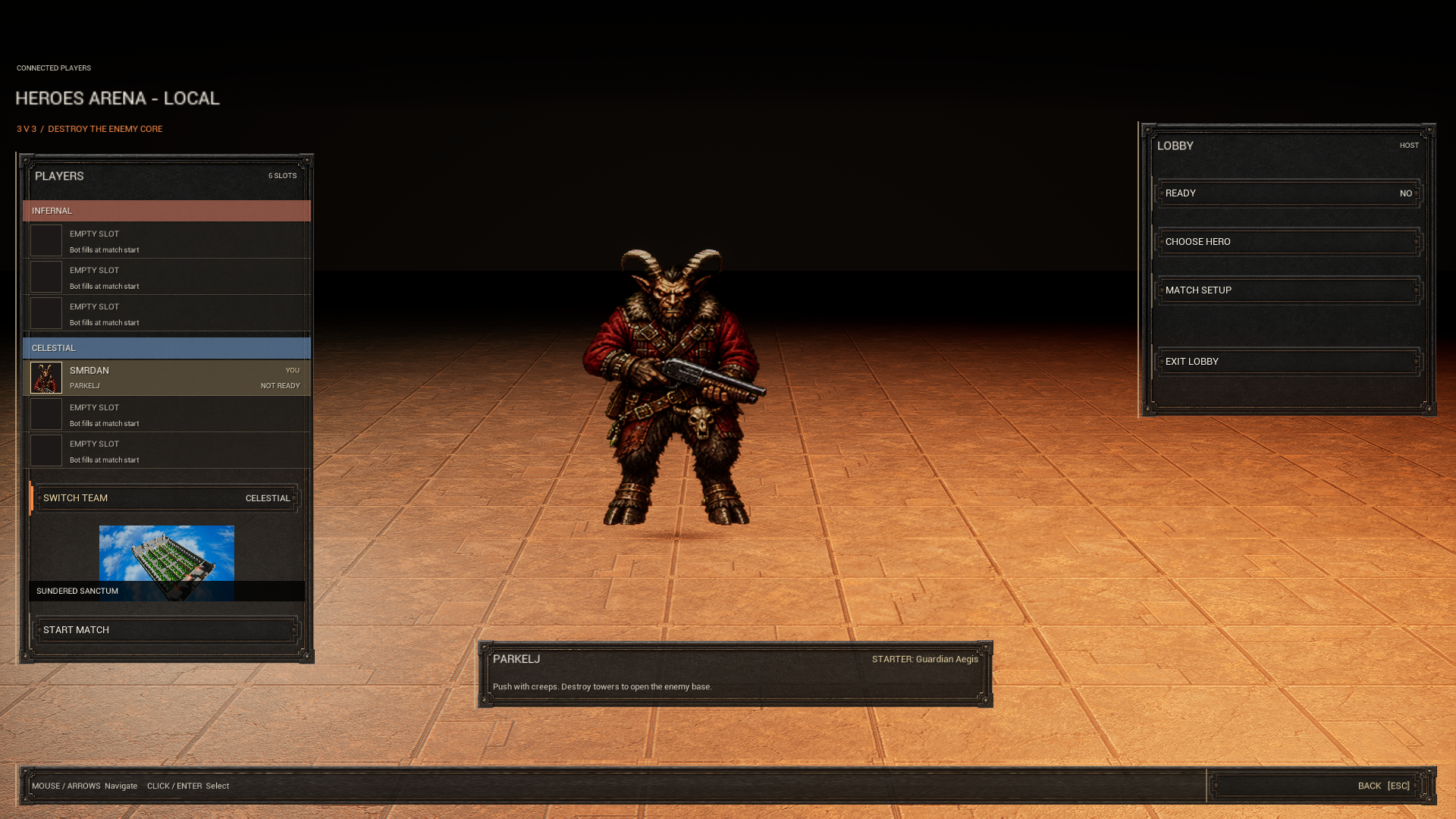
On keyboard, Q/E/F activate the three powers, B opens the shop, K opens skills and R recalls. Tab lets you inspect the HUD and upgrade skills. Controller navigation and device-aware prompts are implemented too.
A playable new direction, still being tuned
The mode is playable in the development builds, with bots, progression, base destruction and a return to the Heroes lobby after the result. It adds a different rhythm alongside the existing shooting modes: less about wandering into the next firefight, more about making that firefight count toward a push.
Balance is still a work in progress. The recorded unattended solo-with-bots match took about 34 minutes, so the intended 15–20-minute pacing isn't something I'm claiming as finished. Human matches, real Steam-peer sessions and physical controller testing still need their own playtime.
But the combination is already there: a pistol in your hands, demons marching past, a new skill point to spend, and an enemy tower that looks considerably less intimidating once your wave reaches it.
If you'd like to support my game-development projects, support me on Patreon. Thank you!