GoRacer is starting to get a garage of its own. Alongside the tracks and the driving, I've been building original cars for it: a lightweight 16V hatch, an 800 hp hillclimb monster, two very different desert trucks, and rebuilt versions of the rally cars that started it all. Fictional names, their own bodywork and liveries, and plenty of that old arcade-racer character.
This update is about the six Original cars in GoRacer's current catalog. There are addon vehicles in the project too, but these are the designs made for GoRacer rather than conversions of third-party car meshes. The four newest additions are Kestrel 16V, Rook HC4, Dacar 2000 and Nomad 2000; Comet and Bulldog have also had substantial rebuilds.
The screenshots below are fresh captures from the current game on Bahía Roja, with menus and HUD hidden, not concept paintings. Click any of them for the full-size image.
Rook HC4: a hatchback with an 800 hp problem
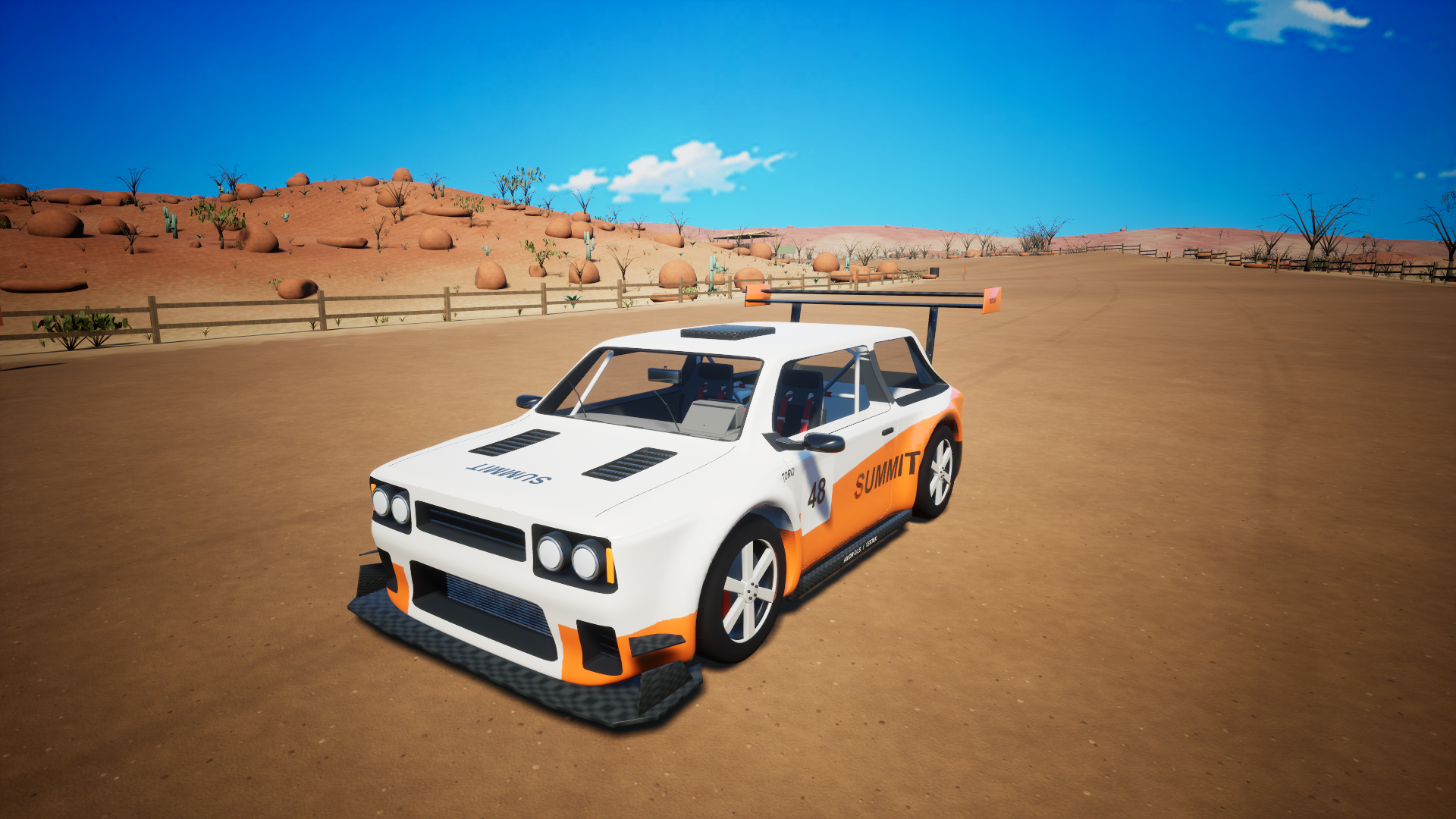
The white-and-orange car at the top is Rook HC4, the least subtle member of the new lineup. It's a purpose-built three-door hillclimb hatch: wide arches, recessed twin-projector lamps, deep cooling openings, a front splitter and a high, two-plane rear wing. A familiar small-car silhouette, with rather a lot of competition hardware attached.
Its current in-game specification is 800 hp, all-wheel drive and 1,120 kg, putting it in class S. It starts on slicks and is aimed at tarmac competition. Summit Works is the white/orange number 48 scheme; Torq Ice and Vertex Ascent give it blue/cyan and white/green alternatives. The sponsors are fictional too.
Kestrel 16V: the small-car end of the garage
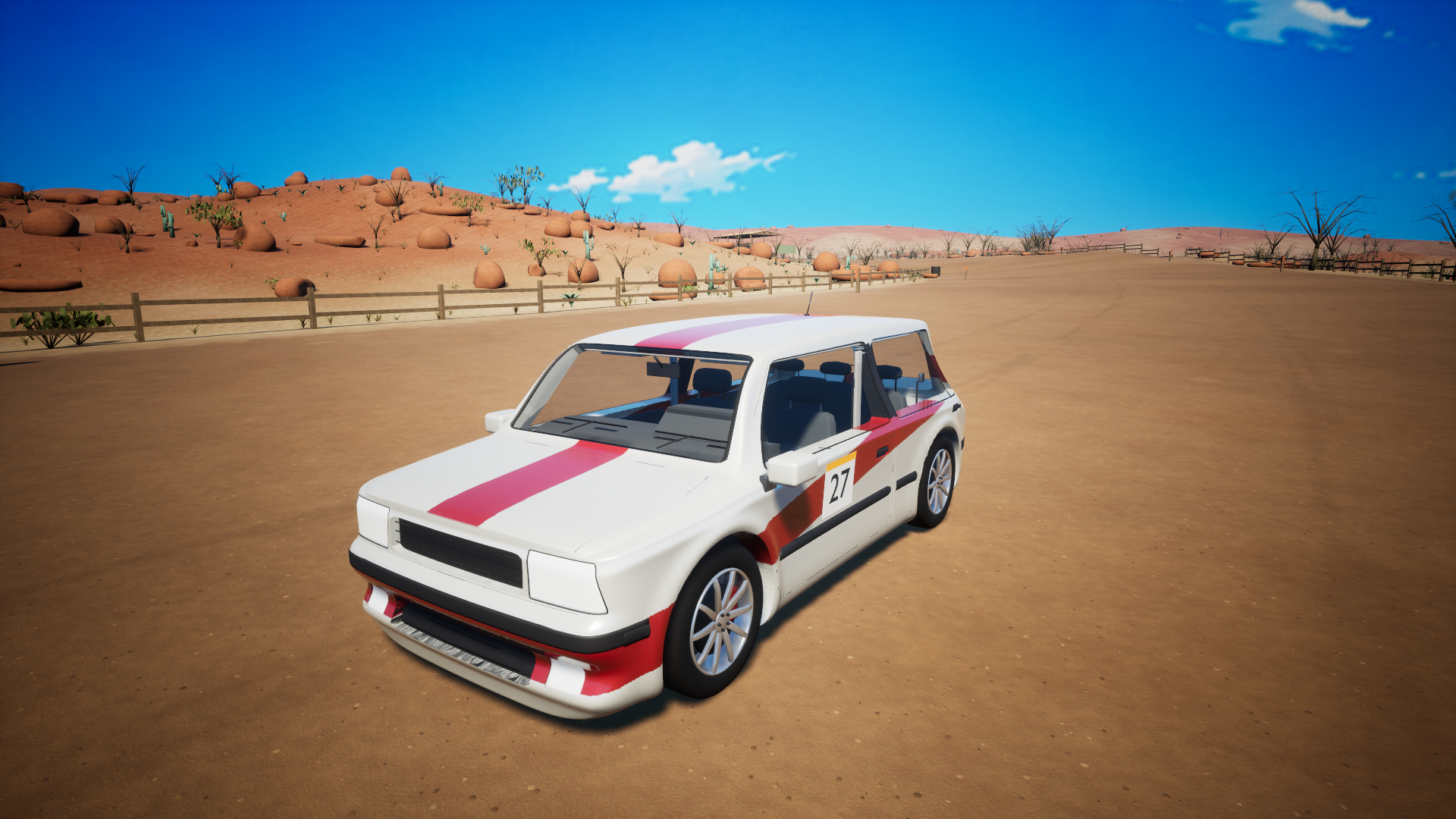
Kestrel 16V is a different proposition: a naturally aspirated 1.8-litre, front-wheel-drive hatch, with 180 hp, a five-speed gearbox and a 980 kg game specification. It sits in class B. Next to Rook, it's almost sensible.
The design is about compact proportions, fitted lamps and glass, and restrained club-racing details. Its number 27 comes in Club Blue, Club Red, Heritage Green and Night Privateer liveries. Inside, it keeps a proper five-seat family-car layout: molded dashboard, patterned cloth, a rear bench and analog speed/RPM instruments, rather than pretending every small hatch needs a stripped competition cockpit.
Dacar 2000: bring the desert
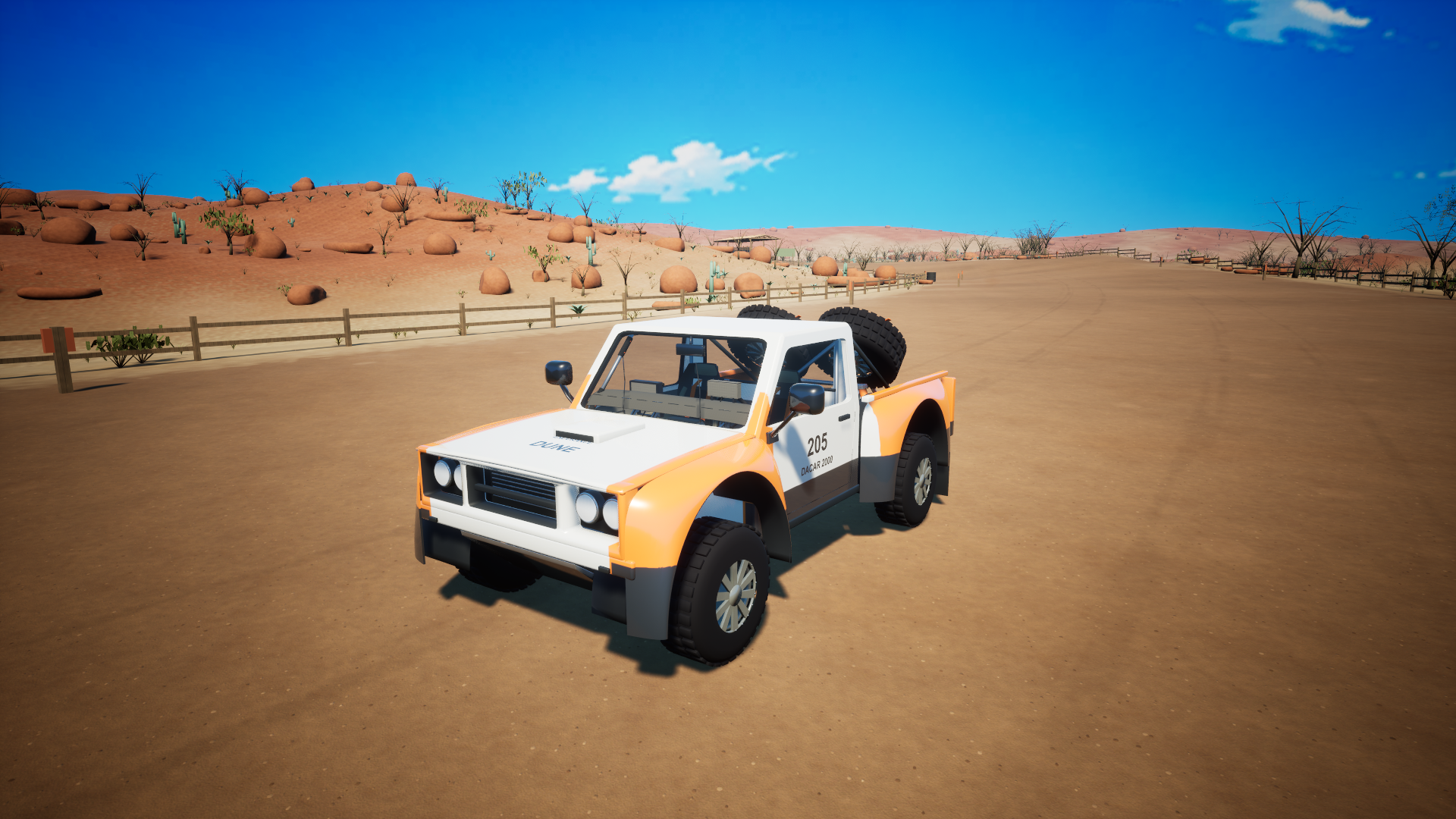
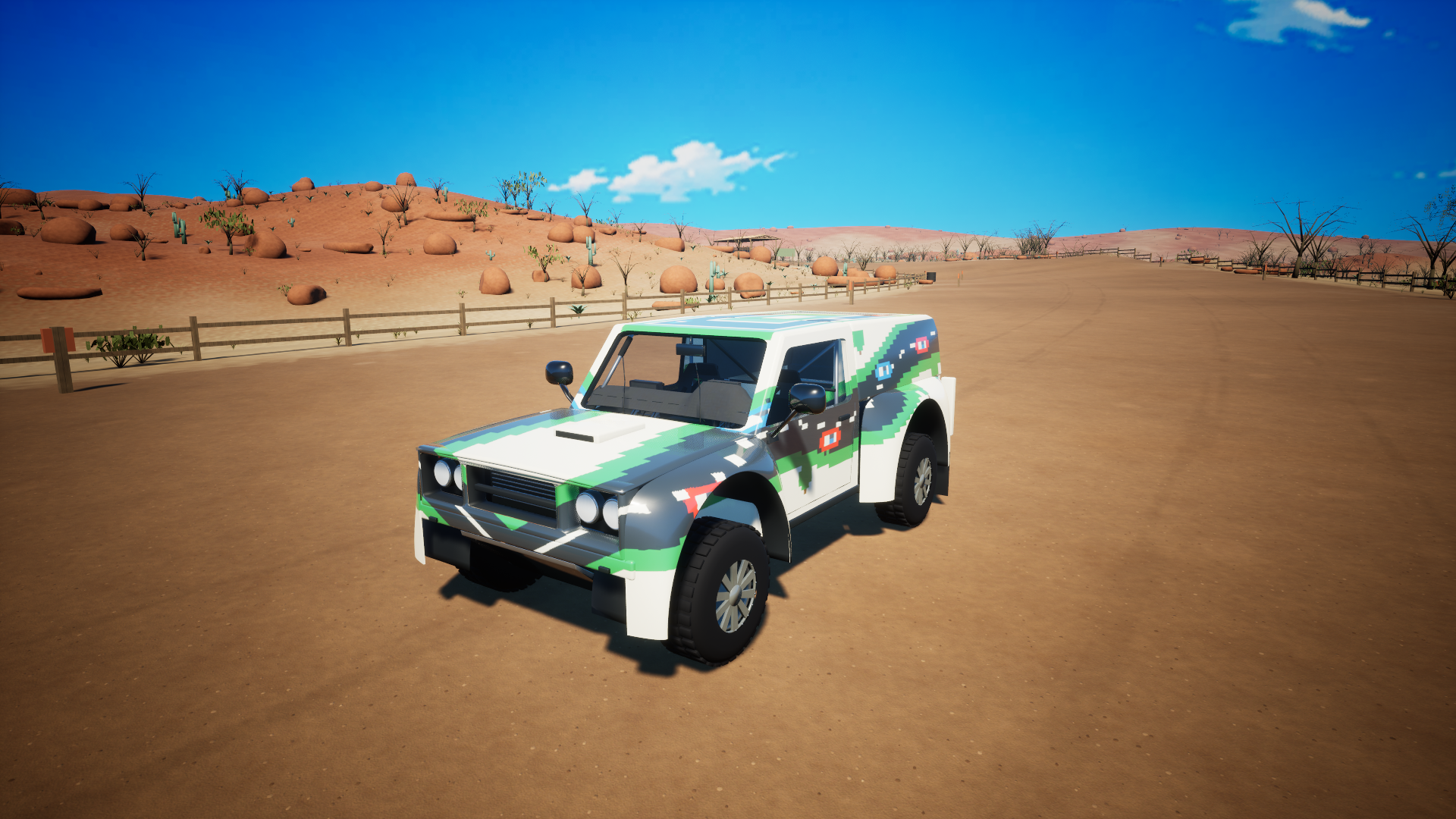
Dacar 2000 goes in the other direction entirely. It's an original two-door landrush pickup, with broad fenders, an open rear bed, big off-road tyres and two fixed spare wheels behind the cab. The white/orange Desert Works finish carries number 205 and fictional DUNE sponsorship.
Underneath is a class-A, 600 hp AWD setup with six gears and a 1,850 kg game weight. It has much longer suspension travel than the road cars, with visible damper movement and a dedicated truck-sized contact footprint. This is still GoRacer's arcade vehicle model, not a claim of full racing-truck suspension simulation.
The alternative liveries get less restrained: Heritage Oil is a retro sponsor-style scheme, Arcade Clash wraps pixel-art fireball graphics around the body, and Close Encounter adds an alien-and-circuitry theme. Building our own vehicles means the paint jobs can have some fun too.
Nomad 2000: same family, different silhouette
Nomad 2000 is Dacar's enclosed landrush sibling, not just a new colour on the pickup. It has its own canopy, rear hatch and glass, plus a supported single rear spare instead of the open bed and twin-spare arrangement.
It shares the 600 hp AWD foundation, but uses shorter final gearing and a lower nominal top-speed target. That changes the gearing tradeoff; it doesn't magically make it faster everywhere. Both trucks keep their own identities in the car selector.
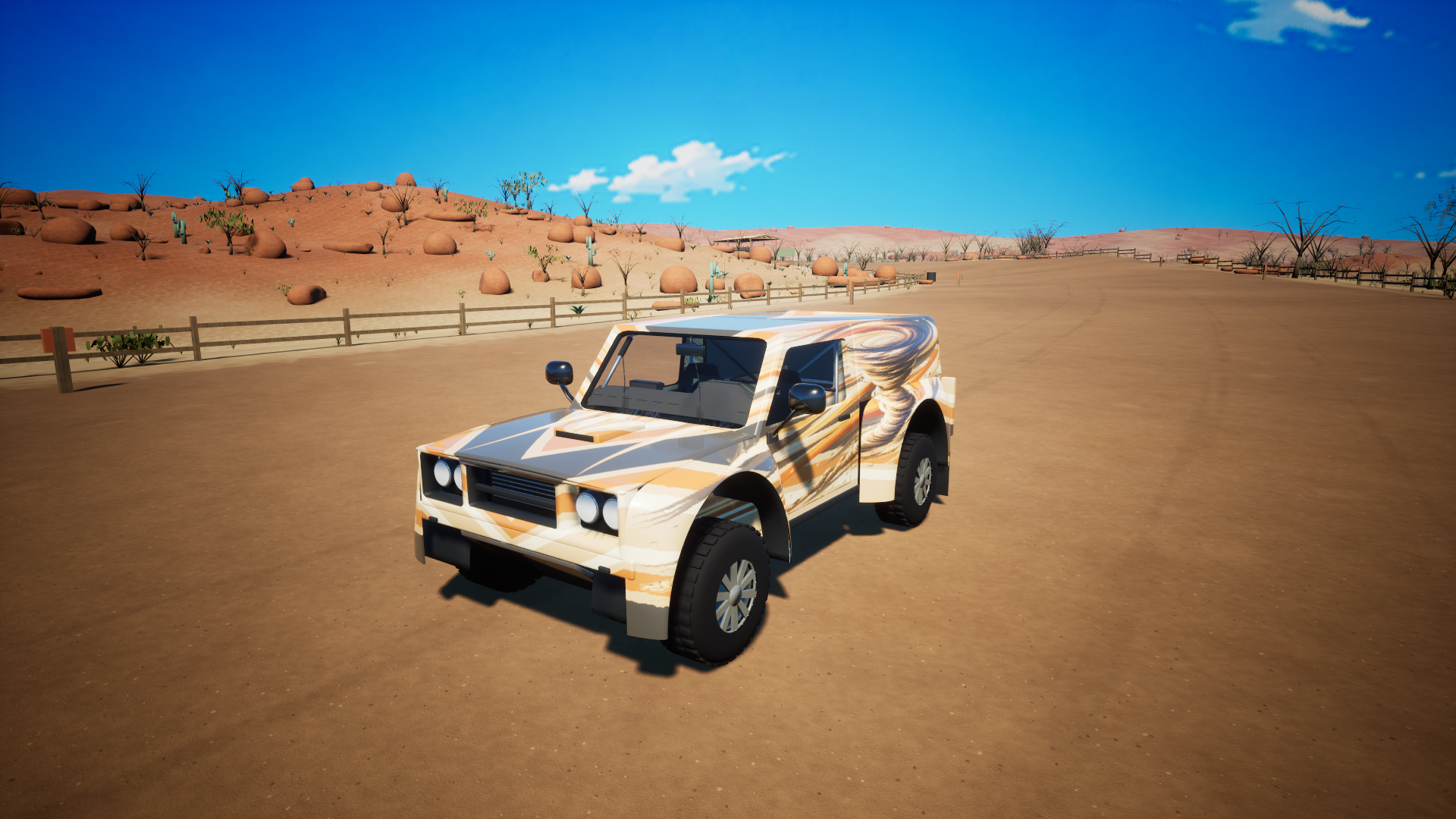
Nomad's finishes are Sandstorm, Pocket Rally and Gold Chrome. Pocket Rally is particularly appropriate for this project: a tiny top-down racing world, complete with cars, roads, trees and kerbs, wrapped around the truck. The little scene is authored as livery artwork, not a game screenshot pasted onto the doors.
Comet and Bulldog: new bodies for the original pair
Updated 12 September 2026: Comet and Bulldog now use their latest rebuilt models, and the gallery has fresh, menu-free screenshots taken on the new Bahía Roja track.
The first two GoRacer cars have had another substantial rebuild. These are new bodies, not just fresh paint on the old shells: the starting meshes came from Tripo P2, then went through Blender for body repairs, fitted glazing, separate rally cabins, running gear and their final in-game finishes.
Comet keeps its blue-and-gold number-7 identity, but now wears a more detailed, purposeful rally body with squared-off arches, a broad stance and a substantial rear wing. The Works Blue finish ties the new model back to the car that started the garage.
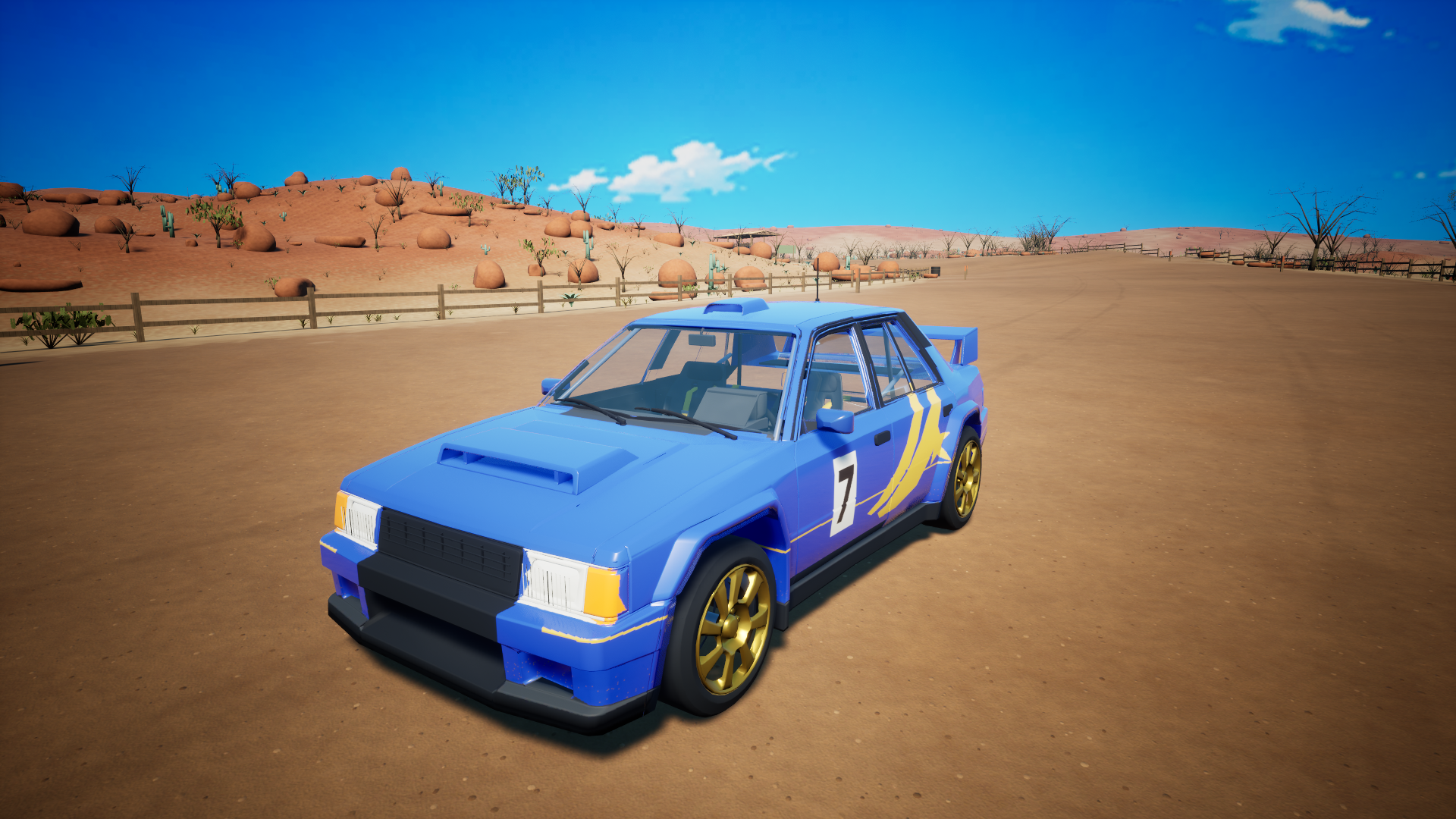
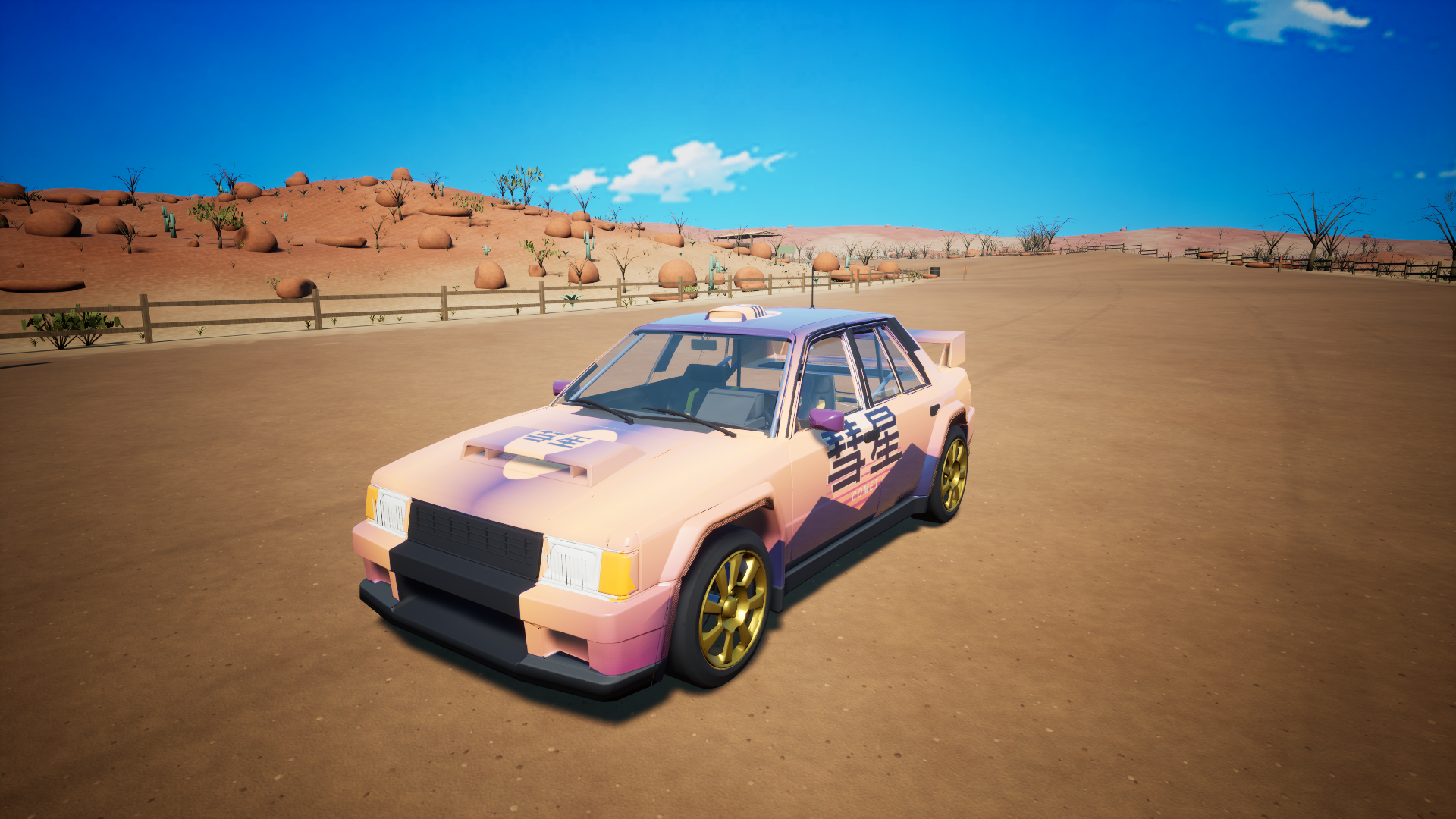
There are new alternatives to the works colours, too. Sunset Comet pairs a warm sunset gradient with mountain graphics; Birthday Pop goes for ivory, ribbons and confetti, while Orbit Program gives it a fictional space-program theme.
Bulldog has its own new compact body, with a lower, sloping nose and broad wheel arches. Works Yellow carries over the yellow, black and green number-12 character, with fitted windows and a dedicated left-hand-drive rally cockpit underneath.
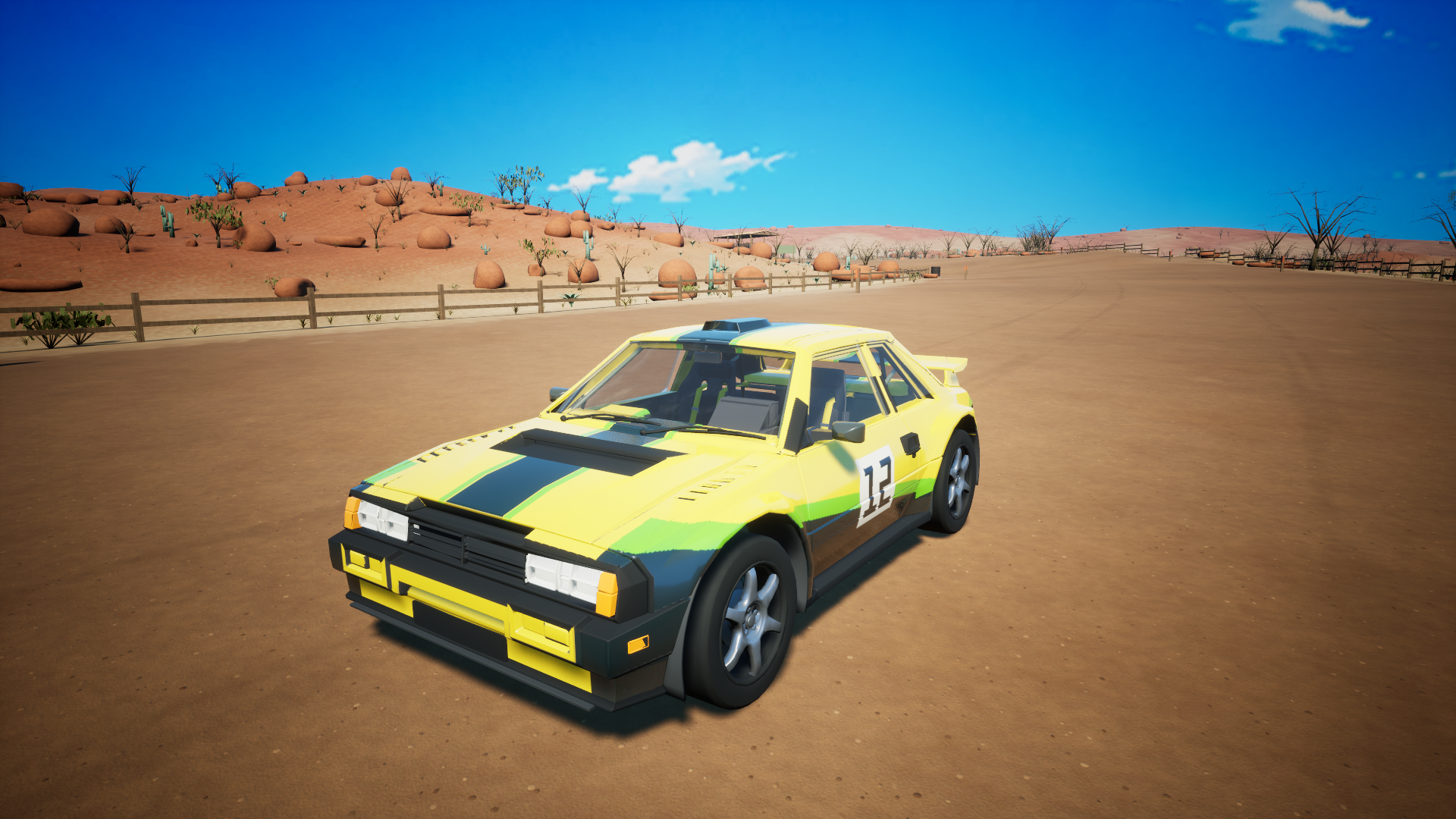
Its new Maja livery is deliberately less serious: pink paint, a signature and original pixel-art hearts. Urban Camo adds angular grey-and-black graphics, and Aged Ivory goes for a worn off-white finish with restrained rust and dirt. The artwork was made for these cars, rather than lifted from another game's screenshots.
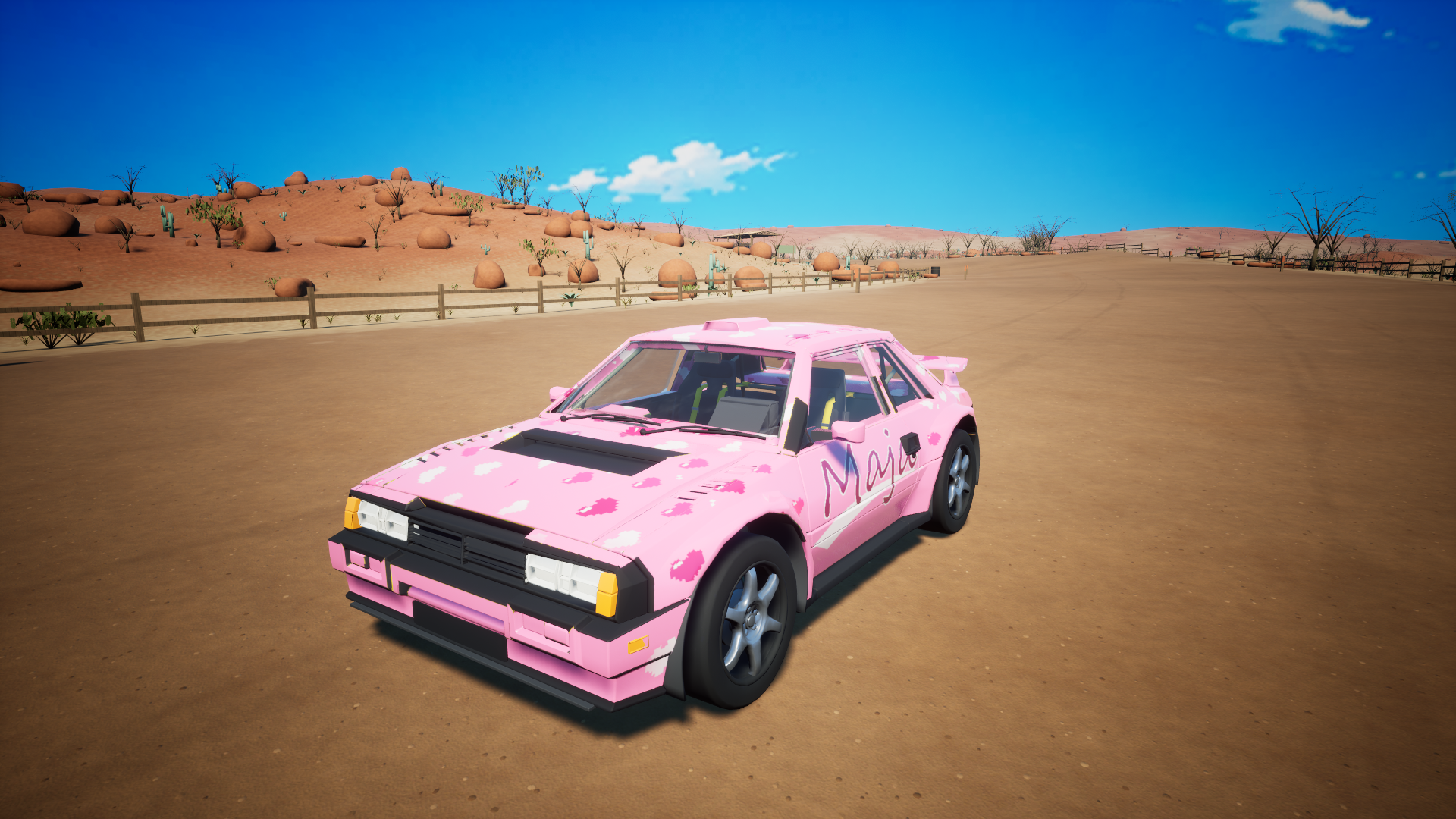
The latest pass also finishes the side-mirror assemblies and refines the cabins and steering-wheel materials. Both cars now have live analog speed and RPM needles. They remain rear-wheel-drive class-B cars: this is a visual and cockpit overhaul, not a hidden change to their engines, gearing or handling.
More than the outside shape
A car isn't finished when it looks good from one angle. These builds have separately authored interiors, steering assemblies, exterior details and wheels, plus four levels of mesh detail for the game to use. Mirrors, cockpit viewpoints, wheel placement and suspension clearance all need to agree with the actual body.
The newer cockpit work gives the cars more character from the driver's seat, too. Kestrel has its everyday analog dashboard, Dacar has a stepped Desert Works dash with amber instruments, and Nomad has a rally-raid-style digital display and navigation tower. Speed, RPM and gear displays are driven by the game; decorative radios, roadbook graphics and auxiliary switches shouldn't be mistaken for fully simulated equipment.
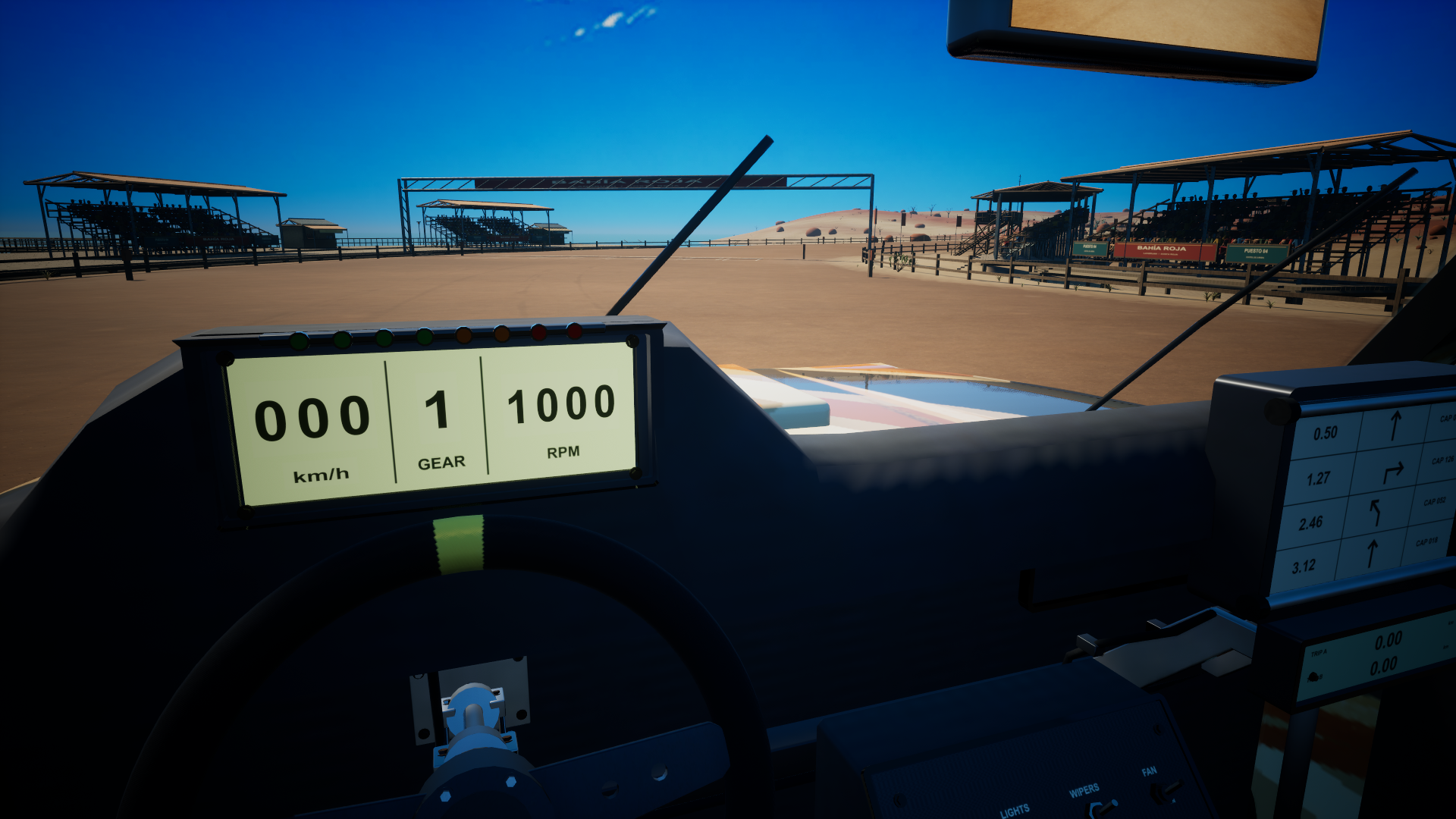
The authoring work lives in Blender and the cars run in Unreal Engine 5.7. There is a lot of less photogenic work between those two: fitting windows to real openings, keeping wheels out of the arches at full lock, preserving material detail through lower-detail meshes, and checking that an interior still fits when it's back inside the car.
A garage with its own character
GoRacer is still a work in progress, and the figures here describe the current game tuning rather than real-world manufacturer specifications. Handling, presentation and cockpit details will keep getting attention. Dirt, Sport and Slick tyre choices are available across the lineup, with tyre and livery choices remembered per car.
But the garage is already much more varied: a little 16V hatch at one end, a winged 800 hp hillclimb car at the other, with rally saloons and chunky desert trucks in between. That's a good spread of excuses to take the long way around a corner.
If you'd like to support my game-development projects, support me on Patreon. Thank you!